
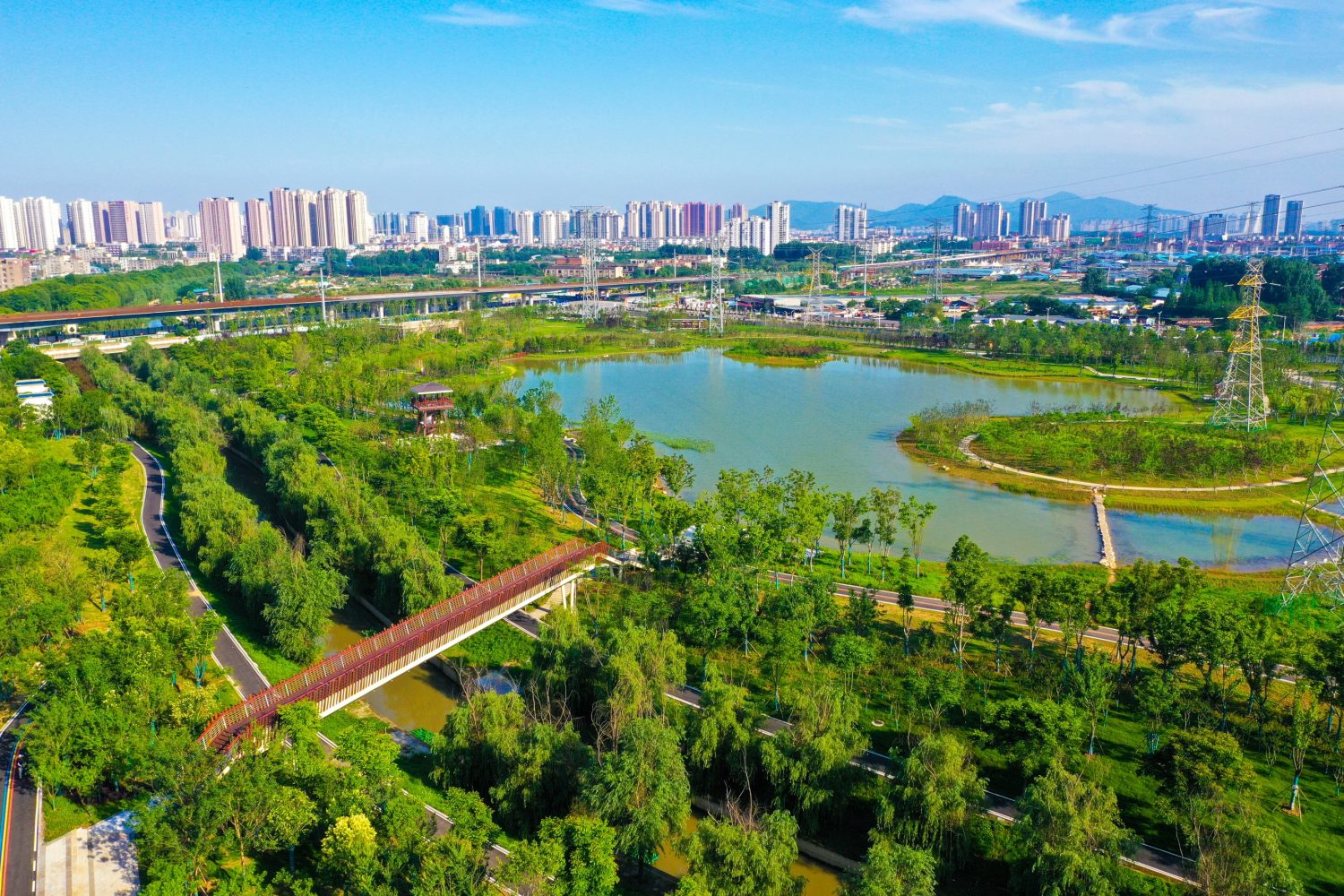
From rain gardens and wetlands to green roofs and permeable pavement, sponge cities are rethinking how urban areas manage one of our most important natural resources.
Key Takeaways
- A sponge city is designed to capture, absorb, store and reuse rainwater rather than moving it away as quickly as possible.
- The concept was developed by Chinese landscape architect Kongjian Yu, who coined the term “sponge cities” in 2003.
- Wetlands, parks, rain gardens, trees and permeable surfaces can reduce stormwater runoff while providing additional benefits for biodiversity and urban cooling.
- A recent proposal for Central Asia suggests that gardens and other smaller spaces could operate as a network of miniature sponge cities.
- Members of the .earth domain tribe are exploring sponge cities through landscape design, urban planning, art, investment and climate action.
What Is a Sponge City?
When rain falls on a forest, wetland or meadow, much of the water is absorbed by soil and vegetation, where it can be stored, filtered or slowly released. Cities covered with concrete, asphalt and other hard surfaces behave very differently. Water runs quickly across those surfaces into drains, sewers and waterways, increasing the potential for flooding during heavy rainfall.
A sponge city is designed to restore some of the natural water cycle within an urban environment. Green spaces, wetlands, rain gardens, trees, ponds, green roofs and permeable surfaces can capture and retain water where it falls, allowing cities to absorb rain more like the natural landscapes they replaced.
These features can provide benefits beyond water management. Nature based urban infrastructure can also support biodiversity, reduce urban heat and create greener public spaces.
Where Did the Sponge City Idea Come From?
Chinese landscape architect Kongjian Yu coined the term “sponge cities” during a public lecture in 2003 while outlining an approach to managing water in flood prone areas of China. The idea eventually became part of Chinese urban development policy and has since attracted interest well beyond the country.
The sponge city approach rethinks how cities manage rainwater, creating places for it to slow down, spread out and soak into the landscape rather than immediately carrying it away through concrete channels, pipes and drains.
The approach becomes increasingly relevant as cities contend with both heavier rainfall and periods of drought. Water captured during storms can replenish soil and groundwater and support urban vegetation rather than simply being carried away.
Could a Garden Become a Miniature Sponge City?
A recent article in The Diplomat takes the concept to a much smaller scale in Central Asia, where groundwater supplies are under growing pressure and shrinking glaciers threaten an important source of water for the region.
The authors explore whether gardens, apartment complexes and other relatively small spaces could collectively function as a network of miniature sponge cities. Instead of irrigating nonnative plants with scarce drinking water, for example, buildings could capture rainwater and use it to support vegetation better suited to the local climate.
The idea suggests that sponge city principles do not necessarily have to begin with enormous infrastructure projects. Gardens, parks, streets and individual developments can all become places where more water is retained and used.
A network of these spaces will not replace larger investments in climate resilient infrastructure, but it offers another way of thinking about how communities can work with the water already falling around them.
Sponge Cities Across the .Earth Domain Tribe
The concept has also captured the attention of the .earth domain tribe, where organizations are approaching sponge cities and urban nature from several different directions.
- TheHub.Earth is a resource for sustainable garden and landscape design that has highlighted Kongjian Yu’s work on both “sponge cities” and the broader idea of a “sponge planet.” The site describes how natural features can slow, absorb and reuse floodwater rather than simply directing it away.
- ClimateCulture.Earth includes sponge cities in its Sustainable Cities Action Pack. It highlights how green spaces, wetlands and permeable surfaces can reduce stormwater runoff while supporting biodiversity and helping cities become more resilient to climate impacts.
- NeoNature.Earth has turned the idea into an immersive experience. Its Sponge City multimedia art series and virtual reality project imagine a future city confronting a disrupted water cycle and explore solutions ranging from river restoration to rain gardens and blue green architecture.
- SmartCity.Earth highlights an Austrian approach known as Sponge City for Urban Trees, which creates underground space where tree roots can grow and rainwater can be retained. The approach can help trees thrive while providing shade, cooling streets and allowing excess rainwater to replenish groundwater.
- SenecaImpact.Earth looks at sponge cities from an investment perspective. Its urban nature work explores financeable approaches including rain gardens, shallow wetlands and absorbent landscaping that can reduce flood risk while restoring ecological functions within urban environments.
One Planet. One Domain.
A sponge city begins with a simple idea that could have far reaching implications for a changing climate. By giving water somewhere to go, cities can become greener, more resilient and better prepared for both floods and droughts.
Across the .earth domain tribe, innovators, designers, artists and investors are already exploring what that future could look like and how cities can work more closely with the natural systems around them.
To learn more and get started, visit Voices.Earth, and check out the latest Voices.Earth podcast series for inspiring stories from our community.