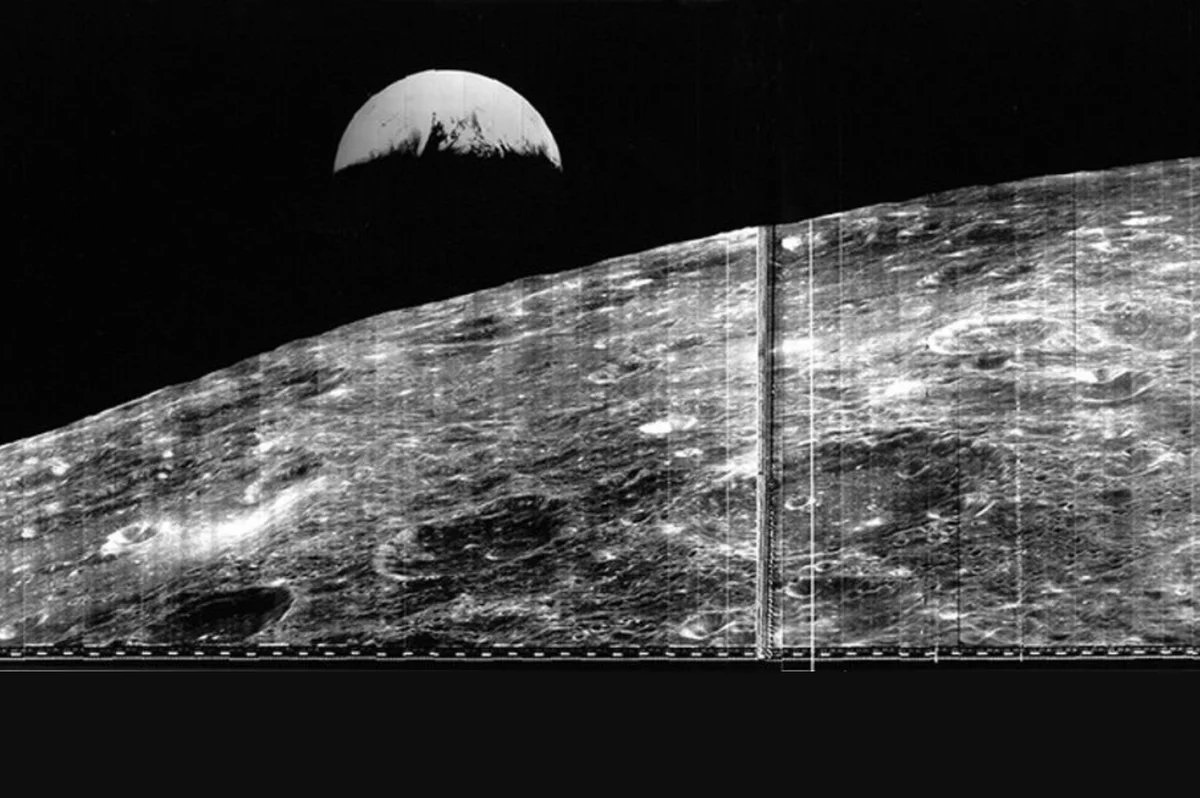
Photo: NASA/Lunar Orbiter 1
The first photograph of Earth from the Moon began a legacy of images that changed how humanity sees our beautiful, fragile planet.
Key Takeaways
- On August 23, 1966, NASA’s Lunar Orbiter 1 captured the first photograph of Earth from the vicinity of the Moon.
- The photograph began a remarkable visual legacy that would later include Apollo 8’s Earthrise, Apollo 17’s Blue Marble, and new images of Earth captured during Artemis II.
- Seeing Earth from space has been associated with the “Overview Effect,” a profound shift in perspective that can deepen people’s appreciation for the planet and the interconnectedness of life.
- Members of the .earth domain tribe, including SpaceBuzz.Earth, are finding new ways to bring that sense of wonder and planetary connection to people here on Earth.
Sixty years ago, humanity saw home from an entirely new perspective.
On August 23, 1966, NASA’s uncrewed Lunar Orbiter 1 captured the first photograph of Earth from the vicinity of the Moon. The grainy black-and-white image showed part of the Moon’s cratered surface in the foreground, with a bright crescent Earth suspended against the darkness of space.
The spacecraft had not traveled to the Moon to photograph Earth. Its primary mission was to survey potential landing sites for the Apollo program, and NASA says the historic Earth image was unplanned. Yet the photograph became one of the mission’s most enduring contributions, offering a perspective that would be repeated in increasingly spectacular ways over the following six decades.
The Beginning of a New View of Earth
The Lunar Orbiter 1 photograph lacks the brilliant blues, greens, whites, and browns we now associate with photographs of Earth from space. However, there is something extraordinary about seeing our planet appear so small against the vastness surrounding it.
Two years later, Apollo 8 astronaut Bill Anders captured the legendary Earthrise photograph as Earth appeared above the lunar horizon. In 1972, the Apollo 17 crew gave the world another enduring image with the Blue Marble, showing the sunlit Earth as a nearly complete sphere.
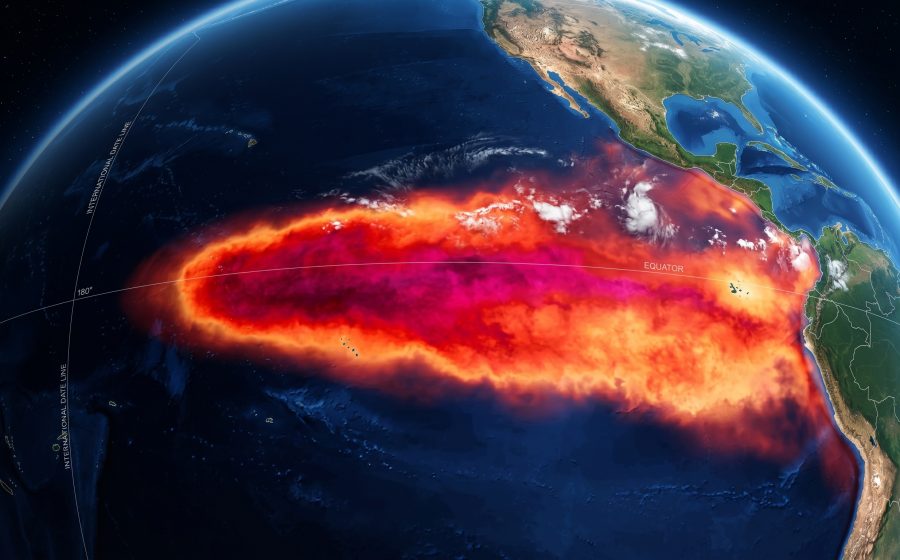
That photograph became so deeply embedded in our collective image of the planet that Voices.Earth revisited it on its 50th anniversary in 2022. The European Union’s Destination Earth project used modern digital technology to re-create the iconic Blue Marble image while simulating climate activity as part of an effort to develop a digital twin of Earth for forecasting extreme weather and improving preparedness.
The technology has changed enormously since 1966, but the magic of seeing Earth from afar remains remarkably powerful.
The Power of the Overview Effect
There is even a name for the profound change in perspective that can occur when people see Earth from space.
The Overview Effect, a term coined by space philosopher and author Frank White, describes the shift in awareness reported by many astronauts who have looked back at Earth and experienced a deeper appreciation for the planet and the interconnectedness of life.
That idea is at the heart of the work of SpaceBuzz.Earth, a nonprofit educational foundation previously featured on the Voices.Earth podcast. SpaceBuzz.Earth uses virtual reality and education to put children in the footsteps of astronauts, allowing them to experience their own version of the Overview Effect without leaving the planet.
The organization’s hope is that seeing Earth from this perspective can inspire children to become ambassadors for its future. It’s a powerful idea because environmental protection ultimately begins with recognizing what we have.
Sixty Years Later, Earth Still Inspires Awe
Scientific American marked the 60th anniversary by tracing the legacy of the Lunar Orbiter 1 photograph through Earthrise and all the way to Artemis II. Earlier this year, astronaut Christina Koch photographed Earth setting behind the lunar surface as the Artemis II crew traveled around the Moon, creating a new image connected to the one captured six decades earlier.
Each generation has gained a clearer and more detailed view of Earth, while the fundamental image remains unchanged. Against the immense darkness of space sits a single planet with oceans, forests, deserts, ice, clouds, and every person and ecosystem we know.
That perspective feels especially meaningful today. Climate change, biodiversity loss, deforestation, ocean warming, pollution, and other environmental pressures can dominate the conversation about Earth’s future. Photographs taken from space offer a different way to approach the same conversation by reminding us of the extraordinary planet at the center of it.
One Planet. One Domain.
The first photograph of Earth from the Moon gave humanity something that had never existed before, which was a view of our planet from another world.
Sixty years later, that image still carries a simple message about the beauty and rarity of the place we call home. The global .earth domain tribe reflects that same sense of connection, bringing together organizations, innovators, scientists, artists, educators, and individuals who share a common interest in our planet and its future.
To learn more and get started, visit Voices.Earth, and check out the latest Voices.Earth podcast series for inspiring stories from our community.