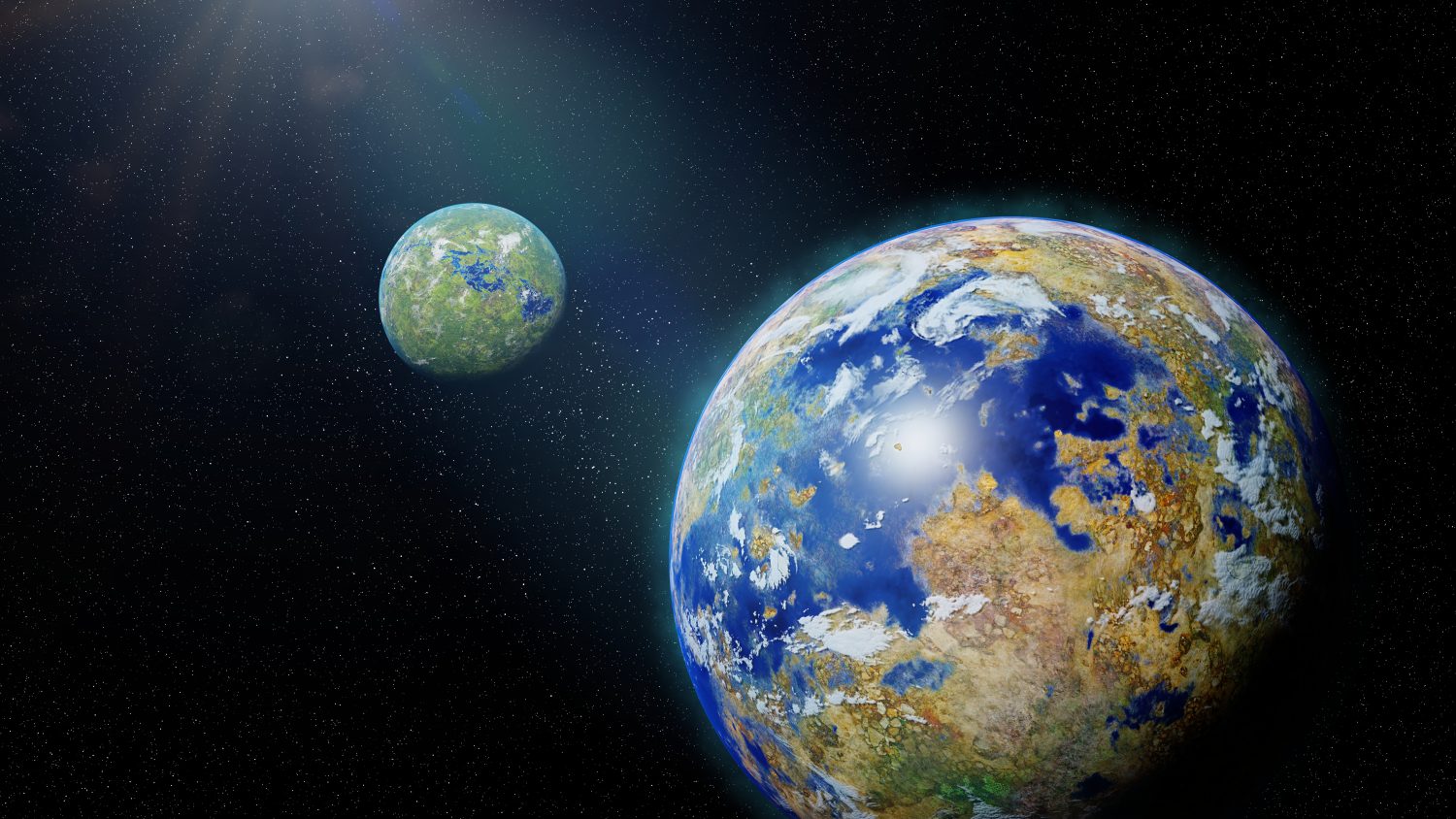
Somewhere in the galaxy, another Earth may be waiting to be discovered. New research could bring us closer to finding it.
Key Takeaways
- Scientists have yet to discover a true Earth 2.0, although thousands of exoplanets have been identified.
- Binary star systems could be an important place to look, since roughly half of nearby Sun like stars have stellar companions.
- A proposed mission called SHERA could search for Earth sized planets in seven nearby binary systems and could potentially find several small planets within habitable zones.
- A planet in the habitable zone is not necessarily another Earth. Water, atmosphere, climate and other conditions would help determine whether a world could actually support life.
- The search for another Earth also reminds us how extraordinary our own planet is, especially since it remains the only world known to support life.
For generations, humans have wondered whether another world like Earth exists. Astronomers have now discovered thousands of planets beyond our solar system, but a true Earth analogue remains elusive.
New research suggests that binary star systems could offer another place to look. Many nearby Sun-like stars have stellar companions, creating complex systems where small planets can be difficult to detect.
A proposed space mission could give scientists a new way to search these systems for Earth sized worlds, bringing us closer to answering one of astronomy’s most compelling questions. Does Earth 2.0 exist?
The Search for Earth 2.0
Astronomers have discovered thousands of exoplanets, revealing an extraordinary variety of worlds throughout our galaxy. The search now includes something more familiar, a rocky planet approximately Earth’s mass orbiting within the habitable zone of a Sun like star, where conditions could allow liquid water to exist.
Even a planet that meets those criteria may look very different from Earth. Its atmosphere, temperature, composition and other characteristics would help scientists determine whether it could support life and how closely it actually resembles our own planet.
Could Earth 2.0 Have Two Suns?
Around half of nearby Sun-like stars have at least one stellar companion, creating binary systems where small planets can be difficult to detect.
A proposed mission called Searching for Habitable Exoplanets with Relative Astrometry, or SHERA, would search seven nearby binary systems for Earth mass planets. Researchers estimate it could potentially discover around four small planets within habitable zones, although SHERA has not been adopted as an official NASA mission.
If Earth 2.0 is hiding in one of these systems, it could look very different from home, with two suns in its sky.
What Would Make Another Planet Truly Like Earth?
From dozens of light years away, Earth might look fairly ordinary, a small rocky planet orbiting within its star’s habitable zone.
Up close, our planet has vast oceans, an atmosphere that helps regulate temperature, active geology, diverse ecosystems and, crucially, life.
Finding an Earth-sized planet in the habitable zone would therefore be only part of the story. Scientists would still need to determine whether the conditions that have allowed life to thrive on Earth for billions of years exist elsewhere.
The Search Makes Our Own Earth Even More Remarkable
There is something magical about imagining another Earth somewhere among the billions of stars in our galaxy, perhaps with oceans and continents, clouds moving through its atmosphere and even the possibility of life.
Finding such a world could transform our understanding of how planets form, how frequently habitable environments emerge and whether Earth is common or exceptionally rare.
Until then, every search for Earth 2.0 offers another reason to appreciate Earth 1.0. The more scientists learn about distant worlds, the more remarkable the combination of conditions on our own planet appears.
One Planet. One Domain.
Earth 2.0 may be somewhere out there, waiting for new technologies and future generations of scientists to find it. For now, however, we have one extraordinary blue planet that we know is alive.
The global .earth domain tribe reflects that sense of wonder and connection, bringing together people and organizations dedicated to exploring, understanding and protecting the planet we all share.
To learn more and get started, visit Voices.Earth, and check out the latest Voices.Earth podcast series for inspiring stories from our community.