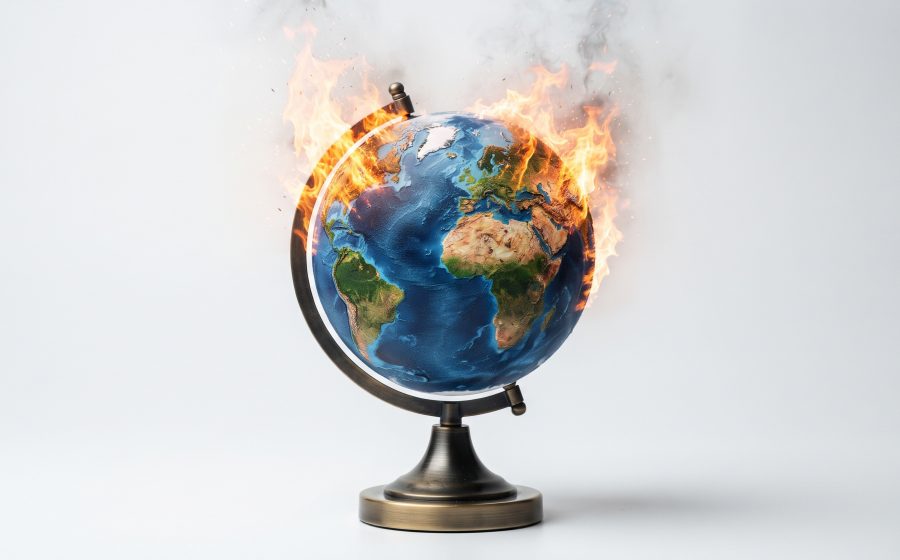

A new United Nations report uses football pitches to illustrate the scale of land degradation while record heat during the FIFA World Cup shows how climate change is already reshaping the world’s biggest sporting event.
Key Takeaways
- A new United Nations report uses football pitches to help explain the growing global problem of land degradation.
- Nearly 40 percent of Earth’s land is already degraded, affecting food security, biodiversity, water resources, and climate resilience.
- Scientists say climate change contributed to the extreme heat experienced during the 2026 FIFA World Cup, highlighting how environmental change is increasingly affecting global sporting events.
- Restoring degraded landscapes remains one of the most effective ways to strengthen ecosystems, support communities, and slow climate change.
As football fans around the world prepare to watch Spain face Argentina in this weekend’s FIFA World Cup Final, another story has quietly emerged alongside the tournament.
While the action on the field has captured global attention, the event has also become a reminder that even the world’s biggest sporting competitions are not immune to a changing climate.
Players, supporters, and broadcasters have spent much of the tournament talking about the heat. According to Reuters, scientists say climate change made the sweltering conditions experienced during the competition significantly more likely.
Forbes reached a similar conclusion, describing the 2026 FIFA World Cup as the highest-impact tournament in the event’s history from a climate perspective because of its emissions, travel demands, and increasingly difficult environmental conditions.
At the same time, the United Nations Environment Programme has offered a different way to think about the planet through the language of football. Its latest report asks a simple question. What would Earth look like if we measured it in football pitches? The answer is surprisingly powerful.
Looking at Earth One Football Pitch at a Time
According to UNEP, the planet contains roughly 20 billion football pitches worth of land. Those landscapes provide the foundation for modern life by producing food, filtering water, storing carbon, supporting biodiversity, and sustaining local economies.
However, nearly 40 percent of that land has already been degraded through a combination of climate change, deforestation, unsustainable farming practices, and expanding development. Every second, the equivalent of four football pitches loses its productivity, making it increasingly difficult for ecosystems to perform the functions people rely on every day.
The comparison helps illustrate the scale of a problem that can otherwise feel abstract. Instead of thinking about millions of hectares, readers can imagine football pitches disappearing from the global landscape every second.
A Planet Under Pressure
The statistics become even more striking. About 70 percent of the world’s farmland already shows signs of degradation, while forests continue to shrink despite significant tree-planting efforts around the world.
The combined effects of land degradation, desertification, and drought now cost the global economy an estimated $878 billion each year, affecting food production, water supplies, biodiversity, and public health.
These challenges are closely connected. As landscapes lose their ability to retain water, store carbon, and support healthy ecosystems, communities become more vulnerable to drought, flooding, extreme heat, and food insecurity. Climate change accelerates these pressures, while degraded land reduces nature’s ability to help stabilize the climate in return.
The World Cup Is Feeling the Effects
The heat surrounding this year’s FIFA World Cup is a reminder that climate change is no longer a distant environmental concern. It is increasingly shaping the experiences of athletes, spectators, event organizers, and host communities.
Extreme temperatures place additional stress on players, increase cooling demands inside stadiums, and create new health risks for fans. As global temperatures continue to rise, organizers of future international sporting events will likely face even greater challenges in balancing athlete safety, scheduling, infrastructure, and sustainability.
Seen together, the Reuters reporting on extreme heat and the UNEP report on land degradation tell the same story from different perspectives. Healthy ecosystems help regulate the climate, while damaged landscapes reduce the planet’s resilience. Eventually, those environmental pressures reach every part of society, including the world’s most popular sporting event.
Restoring the Planet’s Playing Field
The UNEP report also points toward reasons for optimism. Countries around the world have pledged to restore the equivalent of 1.4 billion football pitches of degraded land. Successful restoration projects are already improving food security, increasing water availability, strengthening biodiversity, and creating new economic opportunities in communities across Africa, Asia, and Latin America.
Restoring land will not solve climate change on its own, but it remains one of the most effective investments societies can make to strengthen resilience while helping nature recover.
One Planet. One Domain.
One of the reasons the football pitch comparison resonates so strongly is that it transforms a global environmental challenge into something almost everyone can visualize.
Whether discussing land degradation, extreme heat, biodiversity loss, or climate resilience, the underlying message remains the same. Every community, every ecosystem, and every football pitch ultimately depends on the health of the same interconnected planet.
Organizations using a .earth web domain recognize that connection. They are helping build a global community committed to sustainability, environmental innovation, and long-term stewardship while demonstrating that protecting our shared home is a goal that extends far beyond the final whistle.
To learn more and get started, visit Voices.Earth, and check out the latest Voices.Earth podcast series for inspiring stories from our community.