The developing 2026 El Niño could temporarily push global temperatures years ahead of the current warming trend, offering a troubling glimpse of a hotter future.
Key Takeaways
- A powerful El Niño is rapidly developing in the Pacific, with forecasters warning that it could become one of the strongest ever recorded.
- The combination of a super El Niño and human-driven climate change could make 2027 the hottest year on record.
- At the higher end of projections, global temperatures in 2027 could temporarily resemble levels that the underlying warming trend might otherwise reach around 2040.
- A stronger El Niño can intensify heatwaves, droughts, heavy rainfall, floods, and other extreme weather around the world.
- The potential temperature spike would be temporary, but it offers a preview of conditions that could become increasingly common as greenhouse gas concentrations continue to rise.
A developing super El Niño may be about to give the planet an uncomfortable glimpse of its future. A recent Gizmodo story highlights new analysis suggesting that the powerful El Niño could combine with human-driven climate change to temporarily push global temperatures far beyond the current warming trend. At the upper end of projections, average global temperatures in 2027 could resemble conditions that might otherwise not arrive until around 2040.
At the upper end of projections, average global temperatures in 2027 could resemble conditions that might otherwise not arrive until around 2040.
That does not mean climate change will suddenly leap forward by 13 years permanently. El Niño is a natural climate cycle, and some of the additional warming will subside when the event eventually fades. What makes the current situation so concerning is the increasingly warm climate upon which this powerful natural cycle is developing.
What Makes This El Niño Different?
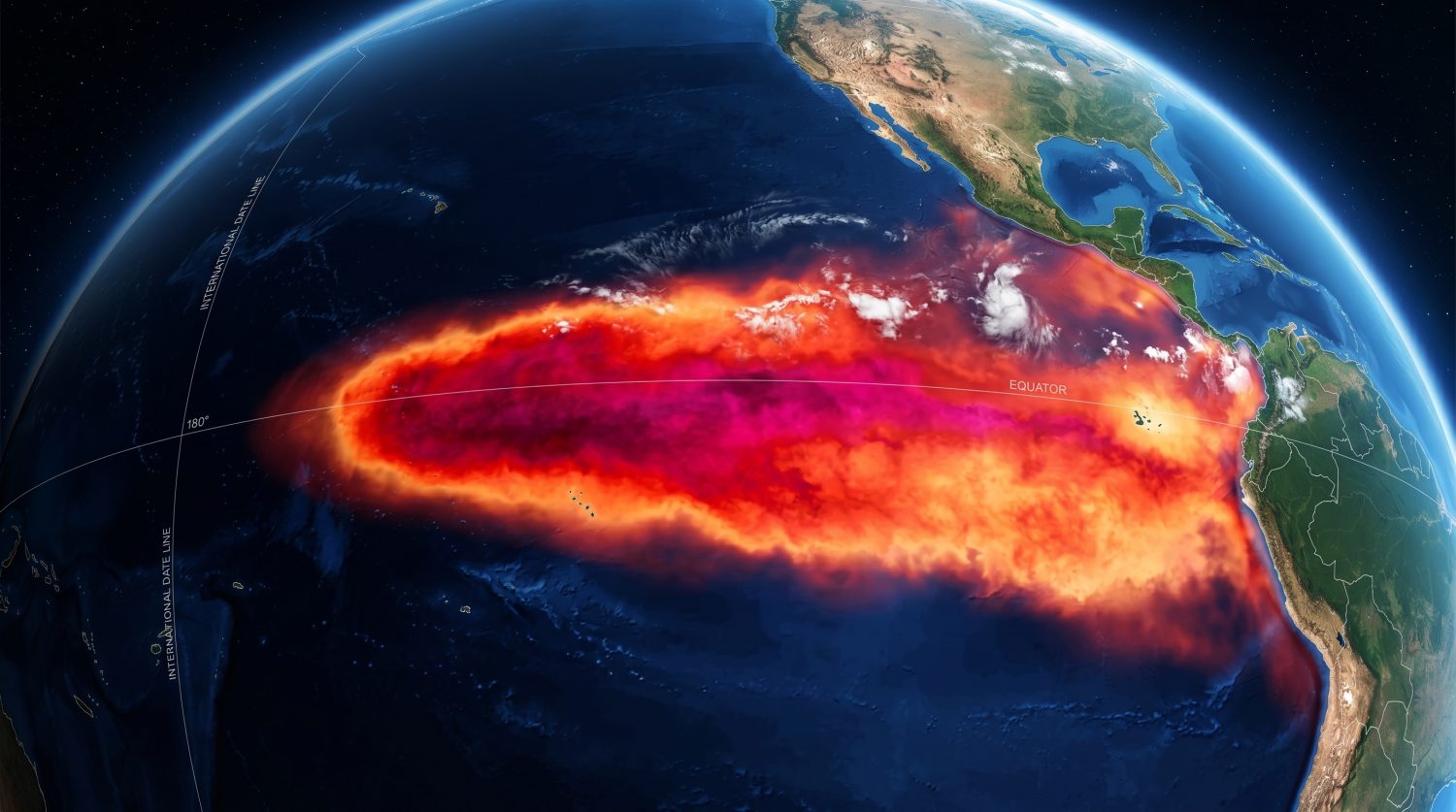
El Niño occurs when unusually warm surface waters develop across the central and eastern tropical Pacific, altering atmospheric circulation and influencing weather thousands of miles away.
The phenomenon occurs naturally every few years, but the developing 2026 event is already attracting unusual attention. The World Meteorological Organization reported in late July that a strong El Niño was intensifying and expected to influence global climate patterns throughout the coming months.
The latest U.S. forecast has raised the stakes considerably, putting the probability of a very strong event above 90 percent. Researchers had already identified unusual warming across the tropical Pacific earlier this year that could help elevate the 2026–2027 event into a super El Niño.
A Preview of a Hotter Planet
The most startling part of the latest analysis involves what this could mean for global temperatures.
Climate scientist Zeke Hausfather estimates a 95 percent probability that the combination of El Niño and human-driven warming will make 2027 the hottest year on record, according to Gizmodo. Global temperatures could reach between approximately 1.67°C and 1.85°C above preindustrial levels. At the upper end, those temperatures would temporarily resemble the climate expected around 2040 under the current warming trajectory.
The distinction between temporary climate variability and long-term global warming matters. El Niño can push temperatures sharply upward for a relatively short period, while greenhouse gas emissions steadily raise the baseline upon which those natural fluctuations occur.
That rising baseline helps explain why recent cooler phases have failed to return the planet to temperatures experienced only a few years earlier.
More Than a Temperature Record
A super El Niño would have consequences well beyond the global temperature rankings.
El Niño can reshape rainfall and weather patterns across much of the world, increasing drought risks in some regions while contributing to heavier rainfall and flooding elsewhere.
The World Meteorological Organization is already forecasting above-normal temperatures across large parts of the planet as the current event strengthens.
The potential effects also connect directly with many of the climate risks we have been following on Voices.Earth, including extreme heat, drought, wildfires, flooding, ocean warming, and marine heatwaves.
Those overlapping pressures make the developing El Niño particularly important to watch through the remainder of 2026 and into 2027.
The Climate of the Future Is Getting Closer
There is something especially unsettling about the idea of temporarily experiencing the climate of 2040 more than a decade early.
The projected spike will eventually ease as El Niño weakens, but the underlying warming will remain. Each decade of continued greenhouse gas emissions raises the starting point for the next El Niño and increases the potential for natural climate variability to produce even more extreme conditions.
The coming year could therefore offer more than another entry in the climate record books. It may provide a preview of conditions that will become far less unusual as the planet continues to warm.
One Planet. One Domain.
The developing super El Niño reinforces how closely connected Earth’s oceans, atmosphere, ecosystems, and climate really are. Changes that begin in the tropical Pacific can influence weather, food systems, water resources, and communities thousands of miles away.
We will continue following the 2026 to 2027 El Niño and the environmental impacts that emerge as it develops.
To learn more and get started, visit Voices.Earth, and check out the latest Voices.Earth podcast series for inspiring stories from our community.